
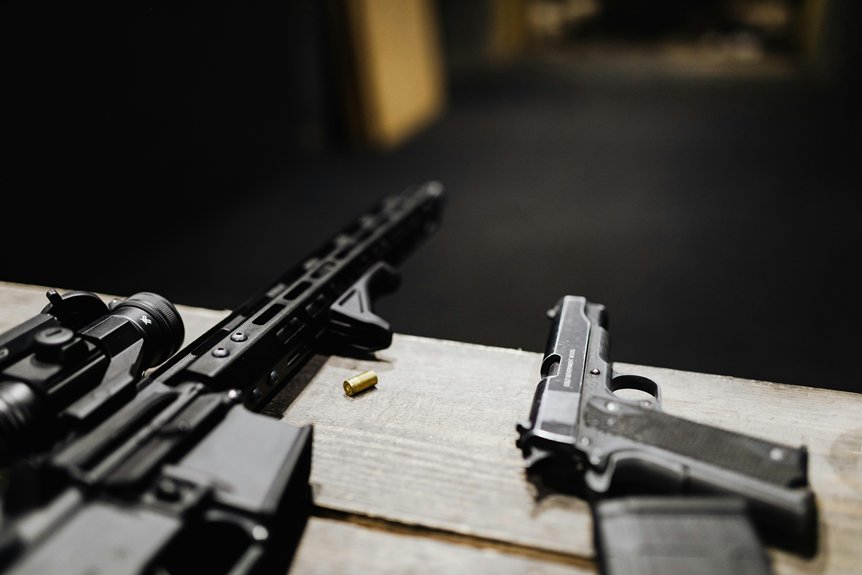
When it comes to pistol shooting, the choice of targets is essential for honing your skills. Each target type serves a distinct purpose, whether it’s improving accuracy or simulating real-world scenarios. From classic paper targets that measure precision to advanced digital options providing instant feedback, the variety is vast. Understanding how each target functions can elevate your training experience. So, what are the specific benefits of each target type?
Paper Targets
When it comes to honing your pistol shooting skills, paper targets are a staple in any shooter’s toolkit. They provide a clear visual reference for accuracy and precision, allowing you to assess your performance after each session.
Various designs, from simple bullseyes to complex scoring zones, cater to different training needs. You can easily set them up at varying distances, helping you to adapt your shooting technique. Additionally, they’re cost-effective and portable, making them accessible for practice anywhere.
Tracking your progress over time becomes straightforward as you can mark your shots and analyze patterns. Whether you’re a beginner or seasoned shooter, paper targets are essential for developing fundamental skills and refining your aim.
Steel Targets
While paper targets are excellent for measuring accuracy, steel targets offer a dynamic and rewarding shooting experience that enhances your skills in different ways.
When you shoot at steel, you get immediate auditory and visual feedback, which helps you gauge your performance instantly. The satisfying clang of a hit reinforces your aim and boosts your confidence.
Steel targets come in various shapes and sizes, allowing you to practice different shooting scenarios and improve your target acquisition speed. They’re durable and can withstand multiple rounds, making them a cost-effective option for regular training.
Additionally, the challenge of hitting a smaller steel target can sharpen your precision and focus, ultimately elevating your overall shooting proficiency.
Reactive Targets
Steel targets provide an excellent foundation for honing your shooting skills, but reactive targets take your training to the next level with their interactive features.
These targets respond when hit, often falling, spinning, or resetting, giving you immediate feedback on your accuracy. This dynamic interaction keeps you engaged and helps simulate real-world scenarios where quick reactions matter.
With options like self-resetting targets or those that emit sounds, you’re not just shooting; you’re developing precision under pressure. Reactive targets also enhance your ability to focus, as you’ll need to adjust your aim based on their movement.
Incorporating these into your practice routine can considerably improve your shooting proficiency and reaction time, making them an invaluable asset for any serious shooter.
Moving Targets
Moving targets offer a challenging yet rewarding way to elevate your shooting skills. Engaging with them requires quick reflexes, precise aim, and the ability to anticipate motion. You’ll find these targets simulate real-life scenarios where threats may not remain stationary.
Practicing with moving targets enhances your tracking ability and helps develop your timing, ensuring you can make accurate shots under pressure.
To effectively hit a moving target, focus on your stance and grip, aligning your body with the target’s path. Utilize follow-through techniques, allowing your shot to connect as the target moves.
Incorporating moving targets into your training not only boosts your confidence but also prepares you for dynamic situations, making you a more proficient shooter overall.
3D Targets
When you’re looking to refine your accuracy and precision, D targets are an excellent choice.
These targets feature a distinct silhouette, often resembling a human figure, which helps you focus on critical shooting zones. The scoring areas are clearly defined, allowing you to track your performance and identify areas for improvement.
Using D targets, you can practice various shooting techniques, from rapid fire to slow, deliberate shots. They encourage you to develop both speed and accuracy, essential skills for any shooter.
Additionally, the size and shape of D targets challenge you to maintain proper stance and grip, enhancing your overall shooting proficiency. Incorporating D targets into your training regimen will elevate your skills and confidence on the range.
Digital Targets
Modern training methods have expanded beyond traditional paper and 3D targets, introducing digital targets that elevate your shooting practice.
These high-tech systems use sensors and software to track your shots in real-time, providing immediate feedback on accuracy and precision. You can customize various target scenarios, from static bullseyes to moving targets, enhancing your skills in dynamic situations.
Digital targets often come with integrated scoring systems, allowing you to monitor your progress over time. They also facilitate training drills that simulate real-world scenarios, improving your tactical decision-making.