
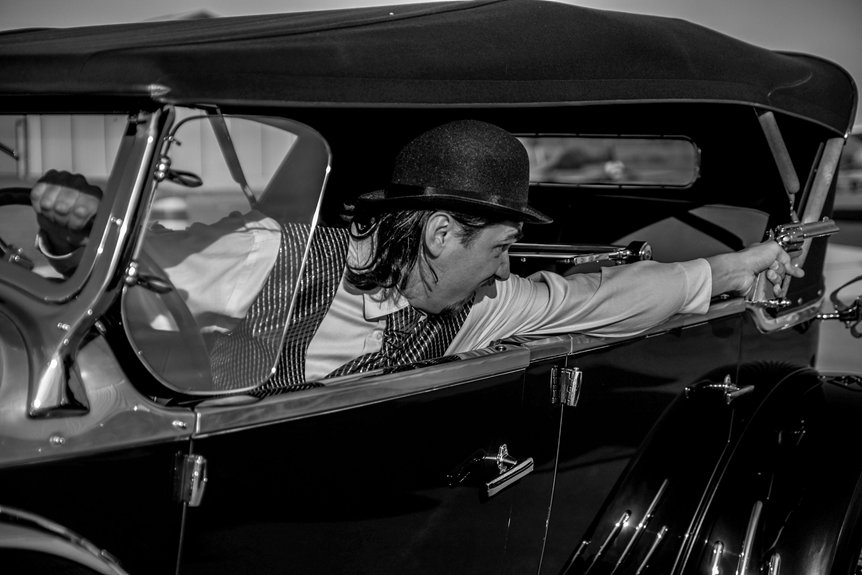
You might be surprised to learn that the pistol’s origins trace back to the late 15th century. This innovation marked a pivotal moment in personal armament, shifting from bulky hand cannons to more refined handguns. As these designs evolved, they considerably enhanced aiming and firing efficiency. But what drove these advancements? And how did they shape combat strategies? Let’s explore the fascinating timeline of the pistol’s development.
The Early Beginnings of Firearms
The early beginnings of firearms trace back to the 9th century in China, where gunpowder was first developed, setting the stage for revolutionary advancements in weaponry.
This explosive innovation quickly led to the creation of primitive weapons like the fire lance, which combined a tube with combustible materials, projecting flames and shrapnel.
By the 13th century, these concepts evolved into more sophisticated devices, such as hand cannons.
These early firearms featured metal tubes that contained gunpowder and projectiles, paving the way for future designs.
As these weapons spread along trade routes, they sparked a wave of experimentation in Europe, leading to innovations that would eventually transform warfare.
Your understanding of firearms’ evolution highlights humanity’s relentless pursuit of technological progress and ingenuity.
The Birth of the Handgun
As gunpowder weaponry advanced, the need for more portable and manageable arms became apparent.
You’ll see that this demand led to the development of the handgun in the late 15th century. Early designs featured a simple, hand-held structure that allowed for easier aiming and quicker firing.
These early handguns, known as hand cannons, were typically made of metal and could be fired with one hand, giving soldiers and civilians alike a tactical advantage in combat and self-defense situations.
The innovation of the handgun marked a significant transformation in warfare and personal armament.
The Matchlock Pistol
By the early 16th century, the matchlock pistol emerged as a revolutionary advancement in firearm technology, offering a more reliable means of ignition compared to its predecessors.
This innovative design featured a spring-loaded arm that held a burning match, igniting gunpowder when the trigger was pulled. You’d appreciate its compact size, making it easier to handle than earlier firearms.
The matchlock pistol allowed for faster firing and greater accuracy, transforming military tactics and personal defense. While it had its limitations, such as susceptibility to weather conditions, it paved the way for future developments in firearms.
When you examine its impact, you’ll see how the matchlock pistol greatly shaped the evolution of handguns, setting the stage for subsequent innovations in firearm design.
The Development of the Wheel Lock
Following the advancements made with the matchlock pistol, the wheel lock emerged in the early 16th century as another significant breakthrough in firearm technology.
This innovative mechanism replaced the slow-burning match with a more reliable ignition source. It utilized a steel wheel that, when turned, created sparks to ignite the powder.
You’d appreciate how the wheel lock allowed for quicker and more discreet firing, eliminating the need for an open flame. Gunsmiths crafted intricate designs, often incorporating ornate elements, making these firearms not only functional but also visually stunning.
The wheel lock paved the way for more advanced locking mechanisms and set the stage for future developments in firearm reliability and efficiency. It represented a pivotal moment in the evolution of handguns.
The Introduction of the Flintlock
The flintlock, introduced in the early 17th century, revolutionized firearm technology by providing a reliable ignition system that was simpler and more efficient than its predecessors. Instead of the complex mechanisms of the wheel lock, the flintlock utilized a piece of flint striking steel to create a spark, igniting the gunpowder.
This innovation meant quicker loading times and a more dependable firing process, making it highly favored by soldiers and hunters alike. You’d appreciate how the flintlock’s design allowed for a lighter, more maneuverable weapon, increasing accuracy and rate of fire.
Its widespread adoption marked a significant turning point, paving the way for modern firearms and changing the landscape of warfare forever. The flintlock truly set the stage for further advancements in firearm technology!
The Rise of Percussion Cap Technology
As firearm technology continued to evolve, the introduction of percussion cap systems in the early 19th century marked a revolutionary leap forward.
This innovation replaced the unreliable flintlock mechanism, enhancing reliability and ease of use. With a small cap containing a shock-sensitive explosive compound, you could ignite the gunpowder more efficiently.
Just a simple strike would set off the cap, leading to a quicker firing time. The percussion cap also allowed for better sealing of the barrel, reducing misfires due to moisture.
As you explore this era, you’ll appreciate how this breakthrough not only improved accuracy but also contributed to the widespread adoption of firearms in military and civilian contexts.
The rise of percussion cap technology truly transformed shooting dynamics.
Innovations in Revolver Design
Building on the advancements brought by percussion cap technology, revolver design saw remarkable innovations that revolutionized personal firearms.
You’d be amazed at how features like the double-action mechanism enhanced firing speed and efficiency. By eliminating the need to manually cock the hammer, you could shoot faster and with greater accuracy.
Additionally, the introduction of swing-out cylinders made reloading a breeze, greatly reducing downtime between shots.
The incorporation of improved rifling techniques enhanced bullet stability and range, transforming revolvers into formidable weapons.
As you explore these developments, you’ll appreciate how they paved the way for modern firearms, combining reliability and performance in a compact design that has persisted through history.
Each innovation reflects a leap in engineering and user experience!
The Impact of the Industrial Revolution
While many factors contributed to the evolution of firearms, the Industrial Revolution stands out as a pivotal force that transformed weapon manufacturing.
It introduced mechanization, which greatly enhanced production efficiency and precision. Factories could now produce standardized parts, allowing for quicker assembly and improved reliability of pistols.
You’d notice that advancements in metallurgy led to stronger, lighter materials, further refining designs. The mass production techniques established during this period made firearms more accessible to the general public, expanding their use beyond military applications.
The introduction of interchangeable parts revolutionized repair and maintenance, ensuring pistols could be kept in peak working condition.
Modern Semi-Automatic Pistols
Modern semi-automatic pistols represent a remarkable fusion of engineering and innovation, delivering high performance and reliability for various applications, from self-defense to competitive shooting.
You’ll appreciate their unique operation, where each pull of the trigger fires a round and automatically chambers the next one, allowing for rapid follow-up shots. The design often features a recoil-operated system, enhancing accuracy and reducing muzzle rise.
With advancements in materials, many pistols now utilize lightweight polymers and stainless steel, improving durability without sacrificing weight.
Ergonomic grips and adjustable sights guarantee comfort and precision tailored to your preferences.
Whether you’re a novice or an experienced shooter, the versatility and adaptability of modern semi-automatic pistols make them an exciting choice in today’s firearms landscape.
The Pistol in Contemporary Society
The role of pistols in contemporary society is multifaceted, reflecting a blend of cultural significance, legal considerations, and technological advancements.
You’ll find that pistols are often viewed through various lenses: personal protection, law enforcement, and recreational shooting. As laws evolve, you may notice a growing emphasis on responsible ownership, with regulations aimed at ensuring safety and accountability.
Technological innovations, like smart guns and enhanced safety features, are transforming how you interact with firearms, making them more user-friendly and secure.
Additionally, pistols play a significant role in various cultural narratives, from films to sports. Understanding these dynamics helps you appreciate the complexities surrounding pistols today, as they continue to influence discussions on rights, safety, and technology in our daily lives.