
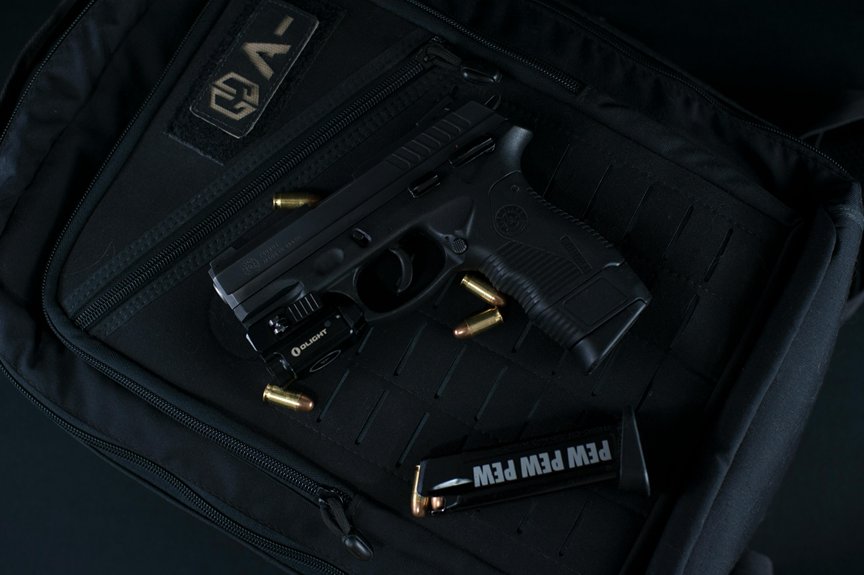
A Glock with a switch is a modified firearm that allows for fully automatic fire, a significant alteration from its standard semi-automatic design. This device changes how the gun operates, enabling continuous firing while the trigger is pressed. However, the legal implications surrounding such modifications are severe. Understanding these details is crucial as they directly impact safety, legality, and law enforcement responses. What else do you need to know about the risks and regulations?
Understanding the Glock Pistol
Glocks are renowned for their reliability and simplicity, making them a popular choice among firearm enthusiasts and law enforcement alike.
You’ll find that Glocks feature a polymer frame, which reduces weight and increases durability. Their striker-fired mechanism offers a consistent trigger pull, enhancing accuracy and ease of use. The safe action system ensures that the pistol won’t fire unless you pull the trigger, providing an added layer of safety.
Additionally, you’ll appreciate the modular design, allowing for easy disassembly and customization.
With a variety of models available, you can choose one that best fits your needs, whether for self-defense, sport shooting, or duty use. Familiarizing yourself with these features will help you understand why Glocks have earned their reputation in the firearms community.
What Is a Switch?
A “switch” in the context of firearms refers to a device that modifies a semi-automatic pistol, such as a Glock, enabling it to fire in fully automatic mode.
This device is typically a small attachment that alters the firing mechanism, allowing the weapon to discharge rounds continuously as long as the trigger is held down.
It’s important to note that switches are often illegal in many jurisdictions, as they convert a standard handgun into a machine gun, which falls under stricter regulations.
Possessing or installing a switch can lead to severe legal consequences.
As a responsible gun owner, understanding the implications of such modifications is crucial for compliance with local laws and maintaining safety.
How a Glock With a Switch Works
When you attach a switch to a Glock, it fundamentally alters the firearm’s operation, transforming it from a semi-automatic to a fully automatic weapon.
The switch modifies the trigger mechanism, allowing the gun to fire continuously as long as you hold down the trigger. This creates a rapid-fire effect, significantly increasing the rate of fire compared to standard operation.
The switch typically engages with the trigger’s rear, manipulating the sear and disconnector to enable this automatic function.
It’s essential to understand that the Glock’s internal components, such as the recoil spring and barrel, remain unchanged.
This modification affects how you handle the firearm, requiring more control to manage the increased firepower effectively.
Legal Status of Glock Switches
Modifying a Glock with a switch raises significant legal concerns. Under federal law, any device that converts a semi-automatic firearm into a fully automatic weapon is classified as a machine gun. This makes Glock switches illegal to possess, sell, or manufacture without proper licensing.
Even possessing a switch can lead to severe legal repercussions, including felony charges. States may have additional regulations, which can vary widely, further complicating the legal landscape.
If you’re considering modifications, it’s crucial to consult local laws and federal regulations. Engaging with a Glock switch not only risks your legal standing but also exposes you to potential criminal liability.
Always prioritize compliance with the law when it comes to firearm modifications.
Safety Concerns and Risks
While the allure of enhanced firepower might be tempting, the safety concerns associated with Glock switches can’t be overlooked.
These devices transform semi-automatic handguns into fully automatic firearms, significantly increasing the risk of unintended discharges. You may find it challenging to maintain control during rapid firing, leading to accidental injuries.
Additionally, the potential for malfunction rises with the installation of aftermarket components, which can compromise your firearm’s reliability. Misuse or improper handling may also result in legal consequences, as possessing a modified Glock can attract serious penalties in many jurisdictions.
It’s essential to consider these risks carefully and prioritize safety when handling any firearm, especially one modified with a switch.
Implications for Law Enforcement
The rise of Glock switches poses significant challenges for law enforcement agencies. You’ll find that these devices enable semi-automatic pistols to fire in fully automatic mode, increasing the potential for rapid-fire incidents.
This shift complicates threat assessment and response strategies, as officers must quickly identify whether a firearm is modified. Training programs will need to adapt, focusing on recognizing Glock switches and understanding their legal implications.
Additionally, the increased lethality of modified firearms can escalate confrontations, putting officers and civilians at greater risk. Law enforcement agencies may also face legal hurdles, as the presence of these devices can influence criminal charges and prosecution outcomes.
Staying informed about emerging trends is critical for effective policing in this evolving landscape.
Perspectives From Gun Enthusiasts
For many gun enthusiasts, the appeal of Glock switches lies in the enhanced versatility and performance they offer. You appreciate how these modifications can transform a standard semi-automatic pistol into a more dynamic tool, enabling rapid-fire capabilities.
This switch can increase your shooting efficiency, particularly in competitive scenarios or training environments.
However, it’s crucial to recognize the legal and ethical considerations surrounding their use. Many enthusiasts advocate for responsible ownership and adherence to local laws.
While the technical benefits are enticing, they come with a responsibility to ensure safety and legality. Ultimately, your perspective on Glock switches may blend the excitement of advanced firearm technology with an awareness of the broader implications within the shooting community.
The Future of Glock Modifications
As gun enthusiasts explore the potential of Glock switches, the future of Glock modifications looks promising and innovative.
You’ll likely see advancements in modular designs, allowing for easy customization of triggers, sights, and frames. Manufacturers are focusing on compatibility and user experience, ensuring that aftermarket parts integrate seamlessly with existing models.
Expect improvements in safety features, enhancing reliability while maintaining performance. Additionally, the rise of 3D printing technology could revolutionize how you personalize your Glock, making custom parts more accessible.
As regulations evolve, you might also witness the emergence of new accessories designed specifically for enhanced functionality. Staying informed on these trends will help you adapt and maximize your Glock’s capabilities in a rapidly changing landscape.
Conclusion
In conclusion, a Glock with a switch represents a significant modification that transforms a standard semi-automatic pistol into a fully automatic firearm. While it may appeal to some for its rapid-fire capability, the legal ramifications and safety risks are serious. Understanding the implications of using such devices is crucial for responsible gun ownership. As regulations evolve, staying informed about the legality and safety of modifications will be essential for both enthusiasts and law enforcement alike.