
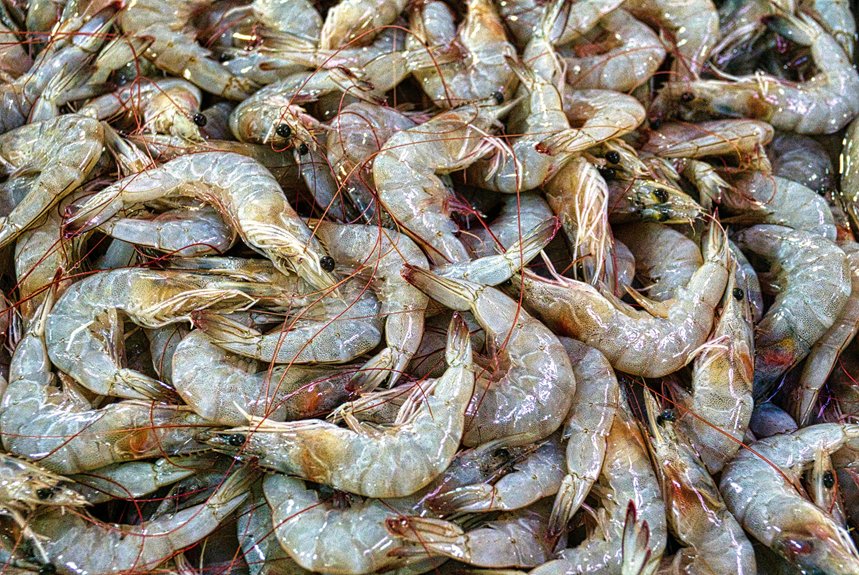
Pistol shrimp have a diverse diet that primarily consists of small invertebrates, including zooplankton, mollusks, and crustaceans. They also target tiny fish larvae when available. Their unique hunting techniques, especially the powerful snapping of their claws, allow them to efficiently capture prey. However, their diet isn’t solely reliant on live prey; they can adapt to include detritus and algae. Understanding these feeding habits reveals essential insights into their ecological roles and the dynamics of their habitats.
Overview of Pistol Shrimp Diet
What do you know about the diet of pistol shrimp?
These fascinating creatures primarily consume small invertebrates and detritus found in their marine environments. Pistol shrimp utilize their specialized claws to capture prey efficiently. Their hunting techniques often involve creating a loud snapping sound, which can stun or disorient potential food sources.
This unique feeding behavior allows them to thrive in various habitats, including coral reefs and sandy substrates. Pistol shrimp also exhibit a symbiotic relationship with other marine animals, providing protection in exchange for food scraps.
Their diet plays a vital role in the ecosystem, as they help control populations of smaller marine organisms while contributing to nutrient cycling. Understanding their dietary habits is essential for appreciating their ecological significance.
Primary Food Sources
Pistol shrimp primarily feed on small invertebrates, such as zooplankton, mollusks, and crustaceans. These food sources are abundant in their natural habitats, typically found in shallow marine environments.
You’ll notice that pistol shrimp often target tiny fish larvae as well, which contribute to their diverse diet.
In addition to these, they consume detritus and algae when prey is scarce. This flexibility in their diet allows them to thrive in varying conditions.
The nutritional needs of pistol shrimp are met through these food sources, providing essential proteins and energy for growth and reproduction.
Understanding their primary food sources is vital for studying their ecological role and the health of the ecosystems they inhabit.
Hunting Techniques and Strategies
The hunting techniques of pistol shrimp are highly specialized, enabling them to capture prey efficiently in their underwater environments.
You’ll find that these shrimp primarily use their powerful claw to create a cavitation bubble. When this bubble collapses, it generates a shockwave that stuns or kills nearby prey. This method is particularly effective against small fish and invertebrates.
Pistol shrimp often ambush their targets, hiding in crevices or burrows until the opportune moment arises. Additionally, they can exhibit cooperative hunting behaviors with their partners, using communication signals to coordinate attacks.
This combination of ambush tactics and sonic weaponry makes them formidable predators in their ecosystem. Understanding these strategies can provide insight into their adaptability and ecological success.
The Role of Symbiosis in Their Diet
Symbiotic relationships play a significant role in the diet of pistol shrimp, enhancing their foraging capabilities.
These shrimp often engage in partnerships with gobies, where the shrimp excavate and maintain burrows while gobies act as vigilant sentinels. This mutualistic arrangement allows you to access a wider range of food sources. As you forage, the goby alerts you to potential threats, giving you time to focus on finding small invertebrates and detritus.
Additionally, some pistol shrimp share their burrows with sea anemones, which can provide extra protection and nutrients. By leveraging these relationships, you not only increase your safety but also improve your overall diet.
This interdependence illustrates how symbiosis enhances survival and resource acquisition in the marine environment.
Impact of Habitat on Food Availability
While the habitat greatly influences food availability for pistol shrimp, various environmental factors can either enhance or limit their access to resources.
In sandy or muddy substrates, you’ll find abundant detritus and microorganisms that serve as primary food sources. Conversely, rocky or coral environments might restrict access to such nutrients.
Water salinity, temperature, and depth also play important roles; for instance, changes in salinity can affect the abundance of prey species.
Additionally, habitat complexity impacts predator presence and competition for food. You’ll notice that in well-structured habitats, pistol shrimp often find more food options, while simplified environments may lead to food scarcity.
Therefore, understanding these factors is essential for predicting their feeding behavior and overall health.
Seasonal Variations in Diet
Habitat influences not just the availability of food but also how that availability changes with the seasons. Pistol shrimp adapt their diet based on environmental conditions.
During warmer months, you might find them consuming more plankton and small crustaceans, as these food sources thrive in increased temperatures. In contrast, colder months often lead to a shift towards detritus and organic material, which are more abundant during this time.
Seasonal changes also affect the behavior of prey species, prompting you to observe variations in hunting strategies. Additionally, reproductive cycles can influence dietary needs, as shrimp may require more protein-rich foods when breeding.
Understanding these seasonal variations is essential for comprehending the overall ecology of pistol shrimp.
Predators and Competition for Food
Pistol shrimp face various predators and competitors that greatly impact their foraging strategies and dietary choices. Their primary predators include larger fish, crabs, and some species of marine mammals, which can considerably reduce their population.
To avoid predation, you’ll find them using their impressive camouflage and burrowing behavior to remain hidden. Additionally, competition for food arises from other benthic organisms, such as other shrimp species and small crustaceans, which can limit their access to resources.
This competition compels you to adapt your foraging techniques, often leading to a more opportunistic feeding behavior. By being aware of their surroundings and adjusting their diet accordingly, pistol shrimp can enhance their chances of survival in a complex and competitive ecosystem.
Ecological Importance of Pistol Shrimp Diet
Understanding the ecological importance of a pistol shrimp’s diet reveals how these small creatures contribute to their marine environments. Pistol shrimp primarily consume small invertebrates and detritus, playing an essential role in nutrient cycling.
By breaking down organic matter, they enhance sediment quality and facilitate the growth of beneficial microorganisms. Their feeding habits also influence the population dynamics of prey species, maintaining ecological balance.
Additionally, their burrowing behavior creates habitats for other marine organisms, promoting biodiversity. As prey for larger predators, pistol shrimp are integral to food webs, supporting higher trophic levels.