
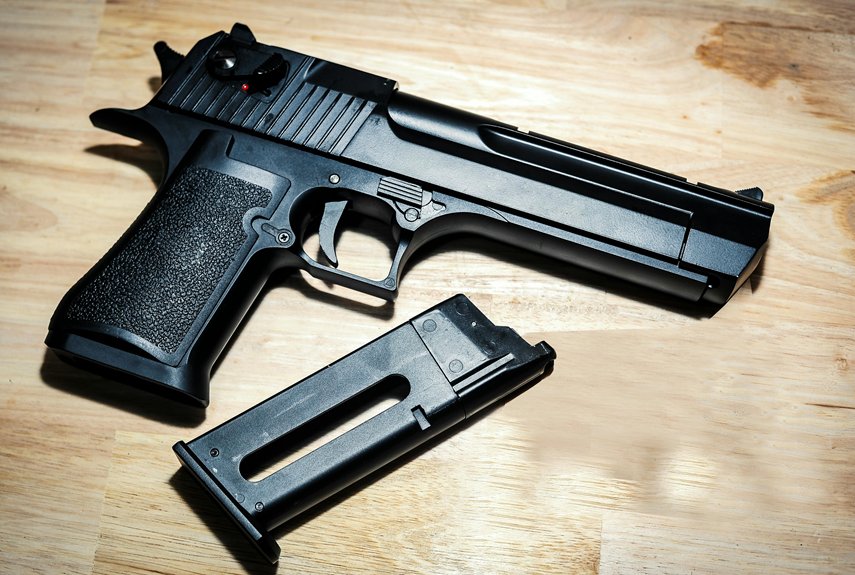
If your pistol has a safety, it’s vital to understand how it functions to guarantee safe operation. The safety mechanism typically blocks the trigger or sear, preventing accidental discharges. Engaging the safety requires your active participation, making it important to check its position before handling the firearm. But the safety isn’t the only feature designed to protect you. Let’s explore the various safety mechanisms that enhance your pistol’s reliability and security.
Understanding the Importance of Safety Mechanisms
Safety mechanisms in pistols are essential for preventing accidental discharges and ensuring responsible handling. These devices act as barriers, preventing the trigger from being pulled unintentionally.
When you engage the safety, it disconnects vital components, effectively making the firearm inoperable until you decide to disengage it. This added layer of protection is significant, especially in environments where the risk of mishandling is high.
Understanding how these mechanisms function helps you appreciate their role in firearm safety. It also reinforces the importance of always treating firearms as if they’re loaded, regardless of whether the safety is engaged.
Manual Safeties: The Basics
While many modern pistols come with various safety features, manual safeties remain a fundamental aspect of firearm design. A manual safety is a device you can engage or disengage to prevent the trigger from being pulled, thereby stopping the gun from firing.
Typically, it’s located on the slide or frame, easily accessible for quick operation. When you engage the safety, it blocks the trigger mechanism or sears, ensuring that even if you pull the trigger, the firearm won’t discharge.
It’s essential to remember that a manual safety requires your active participation; it won’t automatically activate. Always check the position of the safety before handling the pistol, and practice using it until you feel confident in its operation.
Internal Safeties: How They Work
Manual safeties offer a layer of protection, but internal safeties play an equally important role in ensuring a pistol operates safely.
Internal safeties are built into the firearm’s mechanism to prevent unintended discharges during normal handling. These systems typically engage when you pull the trigger, ensuring the firing mechanism only activates under specific conditions.
For instance, some pistols use a firing pin block, which prevents the firing pin from moving forward unless the trigger is fully depressed. Others may incorporate a disconnect that interrupts the firing cycle if the slide isn’t fully in battery.
Understanding how these internal features function is vital for safe firearm handling, as they provide an added level of security beyond manual safeties.
Drop Safeties: Preventing Accidental Discharges
Drop safeties are critical components designed to prevent accidental discharges if a pistol is dropped or subjected to impact.
These mechanisms work by blocking the firing pin or striker from moving forward unless the trigger is intentionally pulled. When you drop the pistol, the drop safety engages, absorbing the shock and preventing the firing mechanism from being activated.
This design often includes a lever or a plunger that only releases under specific conditions, ensuring that the gun remains safe during unforeseen incidents.
Understanding how drop safeties function is essential for every gun owner, as they provide an added layer of security, making it less likely that a fall or impact will result in an unintentional discharge.
Grip Safeties: Enhancing Control and Safety
Grip safeties are vital features that enhance both control and safety when handling a pistol. They function by requiring you to apply pressure to the grip in order to disengage the safety mechanism. This prevents accidental discharges if the pistol is dropped or mishandled.
When you grip the firearm properly, the internal mechanism allows the trigger to operate; release your grip, and the safety automatically re-engages. This design encourages safe handling, guaranteeing that only when you’re in control of the pistol can it fire.
It’s important to practice with the grip safety to develop muscle memory, which ultimately enhances your ability to respond effectively during high-stress situations. Proper training will guarantee you maximize the benefits of this safety feature.
Decocking Mechanisms: Safe Transition to Carry Mode
After mastering grip safeties for enhanced control, it’s important to understand how decocking mechanisms play a role in safely preparing your pistol for carry.
A decocking mechanism allows you to lower the hammer without firing a round, shifting your pistol from a cocked state to a safer, de-cocked position. This feature is essential for preventing unintentional discharges while holstering or handling your firearm.
When you engage the decocker, it safely releases the hammer, often by utilizing a lever or button, ensuring that the firing pin isn’t in a position to strike.
Familiarize yourself with your specific pistol’s decocking function, as operation methods can vary between models, enhancing both your safety and confidence when carrying your firearm.
Trigger Safeties: Preventing Unintentional Firing
One essential safety feature in many modern pistols is the trigger safety, designed to prevent unintentional firing. This mechanism typically consists of a small lever or blade incorporated into the trigger itself.
When you pull the trigger, this lever must be depressed to allow the trigger to move rearward. If you inadvertently apply pressure to the trigger without fully engaging the lever, the mechanism blocks trigger movement, preventing discharge.
This design guarantees that only deliberate actions result in firing. It’s vital to understand how your pistol’s trigger safety operates, as it enhances your control over the firearm.
Always check the specific operation of your model, since variations exist among different manufacturers. Familiarity with this feature can greatly enhance your shooting safety.
Loaded Chamber Indicators: Visual and Tactile Awareness
Alongside trigger safeties, loaded chamber indicators play a significant role in firearm safety by providing visual and tactile awareness of whether a round is chambered.
These indicators can take various forms, including a small notch, a colored indicator, or a raised surface on the firearm. When you check your pistol, you can quickly ascertain its status through these features without needing to manipulate the slide or rely solely on your sense of touch.
This immediate feedback enhances your situational awareness, reducing the risk of accidental discharges. Furthermore, loaded chamber indicators serve as an essential reminder for safe handling practices.
Comparative Overview of Safety Features Across Brands
While evaluating pistol safety features, it’s essential to recognize that different manufacturers implement various designs and technologies to enhance user safety.
For instance, Glock utilizes a “Safe Action” system, which involves three passive safeties that disengage only when you pull the trigger.
In contrast, Sig Sauer offers a decocking lever that safely lowers the hammer without discharging the firearm.
Beretta incorporates a manual safety that blocks the trigger and hammer for added security.
Smith & Wesson often includes an internal lock, allowing you to secure the pistol with a key.
Each brand’s approach reflects its philosophy on safety and user interaction, so understanding these nuances can help you choose a pistol that meets your safety preferences and operational needs.
Best Practices for Safe Handling and Operation
Understanding the safety features of your pistol is just the first step; practicing safe handling and operation is equally important.
Always keep your finger off the trigger until you’re ready to shoot. Treat every firearm as if it’s loaded, regardless of its status. Familiarize yourself with your pistol’s safety mechanisms and make sure they’re engaged when the gun isn’t in use.
Store your pistol in a secure location, preferably in a locked safe or cabinet, away from unauthorized access. When handling your pistol, maintain a clear line of sight and make sure your muzzle is pointed in a safe direction.
Regularly inspect your firearm for any issues and practice safe loading and unloading techniques to minimize risks. Safety is a continuous responsibility.