
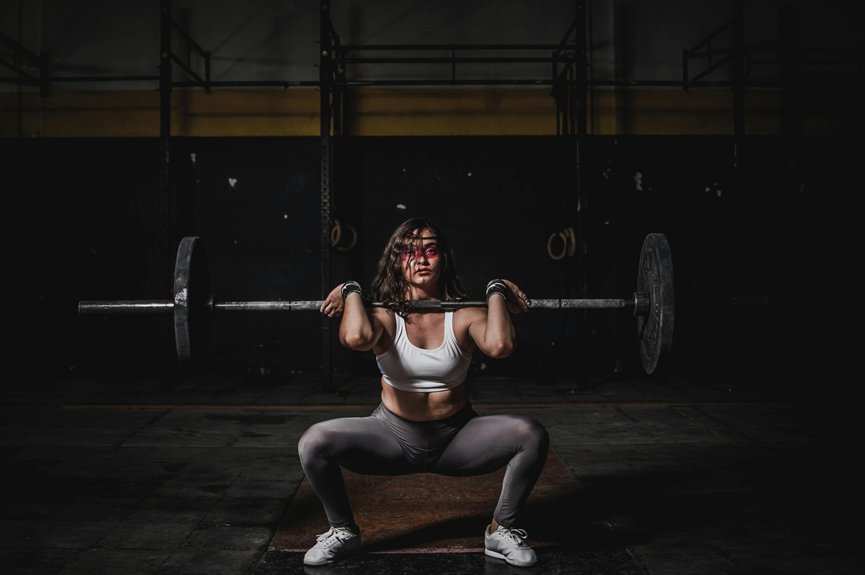
Pistol squats are a powerful exercise that really targets your lower body, engaging your quadriceps, hamstrings, and glutes. But that’s not all—they also challenge your core stability and balance. As you master this move, you’ll discover how it demands flexibility and mobility in your hips and ankles. Curious about the common pitfalls and tips to perfect your form? Let’s explore how to make the most of this impressive exercise.
Overview of Pistol Squats
When you think about challenging bodyweight exercises, pistol squats likely come to mind. This impressive movement demands not just strength but also balance and flexibility.
It’s a single-leg squat that requires you to lower your body while extending one leg forward, engaging your core and stabilizing muscles throughout. Pistol squats are a fantastic way to build lower body strength and improve your overall athleticism.
You’ll find that mastering this exercise can lead to significant improvements in your squatting form and functional movement patterns. Plus, since you’re using your own body weight, you can do them anywhere, making them a convenient option for your workout routine.
Primary Muscle Groups Engaged
Pistol squats are a powerhouse move that primarily targets your quadriceps, hamstrings, and glutes.
As you lower yourself into the squat, your quads work hard to control the movement, building strength and definition. Your hamstrings kick in during the ascent, helping you push back up to standing.
Meanwhile, your glutes engage to stabilize your hips and provide power, making this exercise incredibly effective for the lower body. Not only do these muscles grow stronger, but they also improve your overall leg functionality.
Incorporating pistol squats into your routine can lead to impressive gains in strength and muscle tone.
Core Stability and Balance Benefits
Although many focus on the lower body, pistol squats also greatly enhance your core stability and balance. When you perform this challenging movement, your core muscles engage intensely to maintain proper posture and stability throughout the exercise. This activation not only strengthens your abdominals and obliques but also improves your overall body control.
As you lower yourself into the squat, you’ll develop better balance by forcing your body to stabilize on one leg, which activates the small stabilizing muscles around your hips and ankles.
Over time, practicing pistol squats can lead to a more stable core and improved proprioception, helping you perform daily activities and other exercises more effectively. Embrace the challenge and watch your balance soar!
Flexibility and Mobility Requirements
To successfully execute a pistol squat, you need a solid foundation of flexibility and mobility, especially in your hips, ankles, and hamstrings.
These areas play a vital role in allowing you to lower yourself smoothly while maintaining balance. Tight hips can limit your range of motion, making it difficult to perform the squat correctly. Similarly, stiff ankles can hinder your ability to keep your heel down and shift your weight properly.
To improve your performance, incorporate dynamic stretches and mobility drills into your routine. Exercises like deep lunges, hamstring stretches, and ankle mobility work will help you achieve the flexibility you need.
Common Mistakes to Avoid
When working on your pistol squat, it’s easy to fall into some common pitfalls that can hinder your progress. One major mistake is neglecting your form; rounding your back or letting your knee cave in can lead to injuries.
Make certain your chest stays up and your knee tracks over your toes. Another common error isn’t engaging your core. A strong core stabilizes your body, making the movement smoother.
Additionally, many people rush through the motion, sacrificing control for speed. Take your time to master each phase of the squat.
Finally, avoid pushing through pain—if something feels wrong, reassess your technique or take a step back. By steering clear of these mistakes, you’ll enhance your strength and stability in no time!
Tips for Mastering Pistol Squats
Mastering pistol squats can be a rewarding challenge, and with the right approach, you can achieve impressive results.
Start by building strength with progressions like box squats or assisted pistol squats. Focus on form—keep your chest up, engage your core, and drive through your heel.
Flexibility plays an essential role; incorporate stretches for your hips and hamstrings to enhance your range of motion. Practice balancing on one leg, and use a wall or sturdy surface for support initially.
Gradually work on lowering yourself while maintaining control. Finally, be patient! It takes time to develop the necessary strength and coordination.
Celebrate small victories along the way, and soon you’ll be confidently performing full pistol squats like a pro!