
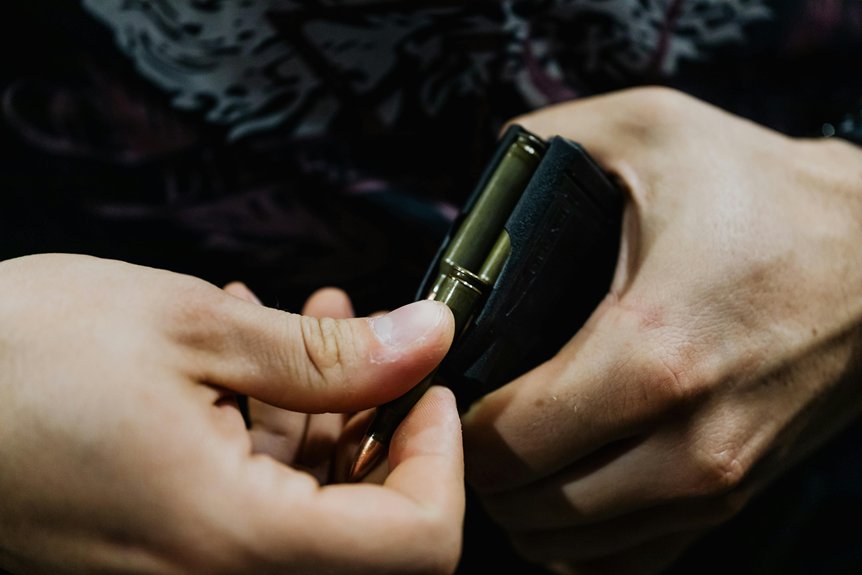
When you consider the components of a rifle and pistol cartridge, it is crucial to recognize the bullet, casing, primer, and gunpowder. Each part plays a critical role in ensuring effective firearm operation. Understanding these elements isn’t just academic; it directly impacts your ammunition selection and shooting performance. So, what exactly does each component do, and how do they work together? Let’s break it down.
Understanding the Bullet
The bullet is a vital component of both rifle and pistol cartridges, serving as the projectile that delivers kinetic energy to the target.
You’ll find bullets constructed from various materials, including lead, copper, and alloys, each chosen for specific performance characteristics.
The bullet’s shape, or geometry, greatly affects aerodynamics, influencing accuracy and stability in flight.
Key design features like the ogive, cannelure, and meplat play essential roles in terminal ballistics and expansion upon impact.
Weight and caliber are vital factors too, as they determine trajectory and energy transfer.
Understanding these elements not only enhances your shooting performance but also informs your choice in ammunition for specific applications, whether for target shooting, hunting, or self-defense.
The Role of the Casing
While the bullet is the projectile that impacts the target, the casing holds everything together and plays an essential role in the cartridge’s overall function. The casing encases the primer, powder, and bullet, forming a sealed unit that maintains integrity under pressure.
Made from materials like brass, steel, or aluminum, it provides the necessary strength to contain the combustion gases generated during firing. Additionally, the casing guarantees proper alignment and feeding into the chamber, facilitating reliable cycling in semi-automatic and automatic firearms.
Its design influences extraction and ejection processes, affecting the overall reliability of the firearm. Ultimately, the casing is vital for maintaining consistency, safety, and performance during shooting operations.
Primer: Ignition Component
At the heart of every cartridge lies the primer, an essential component that ignites the propellant. This small, metal cup contains a sensitive explosive compound, typically lead azide or diazodinitrophenol.
When struck by the firing pin, the primer detonates, producing a flash that travels through the flash hole into the cartridge case.
You’ll find two primary types of primers: boxer and berdan. Boxer primers feature a single flash hole and are easier to reload, while berdan primers have two holes and are less common in reloading.
Proper primer selection is vital for reliable ignition, as variations in size and type can affect performance. Understanding primers enhances your knowledge of ammunition efficacy and reliability in firearms.
Gunpowder: The Propellant
Gunpowder serves as the essential propellant in firearm cartridges, driving the bullet down the barrel with explosive force. It consists primarily of nitrocellulose, which ignites rapidly upon receiving a spark from the primer. This combustion generates high-pressure gases that propel the bullet forward.
The amount and granulation of gunpowder directly influence the velocity and accuracy of the projectile. You’ll find various formulations designed for specific applications; for example, some are optimized for rapid fire while others prioritize accuracy at longer ranges.
Understanding the characteristics of gunpowder is vital for both reloading and performance evaluation. Safety precautions are imperative, as improper handling can lead to dangerous situations. Always adhere to established guidelines when working with this volatile component.
Different Types of Cartridges
Understanding gunpowder sets the stage for exploring the various types of cartridges available for firearms.
Cartridges can be broadly categorized into centerfire and rimfire types. Centerfire cartridges feature a primer located in the cartridge’s center, allowing for consistent ignition, making them ideal for rifles and handguns. Rimfire cartridges have the primer built into the rim of the case, offering a simpler design often used in smaller caliber firearms.
Additionally, you’ll encounter metallic cartridges, which are commonly used in rifles and pistols, and shotshells, designed for shotguns. Each cartridge type serves specific purposes, from hunting to target shooting, and understanding these distinctions helps you choose the right ammunition for your needs.
How Each Component Works Together
While it might seem straightforward, the interplay of each cartridge component is vital for ideal firearm performance.
The case houses the primer, powder, and projectile, creating a sealed environment for combustion. When you pull the trigger, the firing pin strikes the primer, igniting it and producing a small flame. This flame ignites the propellant powder, creating rapidly expanding gases.
These gases build pressure, forcing the projectile down the barrel at high velocity. The bullet engages the barrel’s rifling, imparting spin for stability and accuracy.
Each component—case, primer, powder, and projectile—must function harmoniously. Any inconsistency can lead to misfires, reduced accuracy, or excessive pressure, ultimately affecting your shooting experience and performance.
Understanding this synergy is vital for effective marksmanship.
Safety Considerations With Ammunition
Proper handling and storage of ammunition is critical for maintaining safety and performance.
Always store ammunition in a cool, dry place away from direct sunlight and moisture, as these elements can degrade its quality. Use original packaging or designated containers to prevent damage.
When handling ammunition, wear safety glasses and maintain a clear workspace to avoid distractions. Always check for signs of corrosion or damage before use, as defective rounds can lead to misfires or dangerous situations.
Keep ammunition out of reach of unauthorized persons, especially children.
When transporting ammunition, guarantee it’s secured and stored in a suitable container.
Tips for Choosing the Right Cartridge
Selecting the right cartridge for your firearm can greatly impact both performance and accuracy. First, consider the caliber; it must match your firearm’s specifications.
Next, evaluate the bullet type—full metal jacket (FMJ) is ideal for target practice, while hollow points offer expansion for self-defense.
Pay attention to the cartridge length and pressure; make sure it’s compatible with your firearm’s chamber.
You should also factor in the purpose—whether hunting, sport shooting, or tactical applications will dictate your choice.
Finally, don’t overlook brand reliability; reputable manufacturers often provide consistent quality and performance.
Test various cartridges in your firearm to find what works best, as individual preferences and shooting styles can greatly influence your experience.